
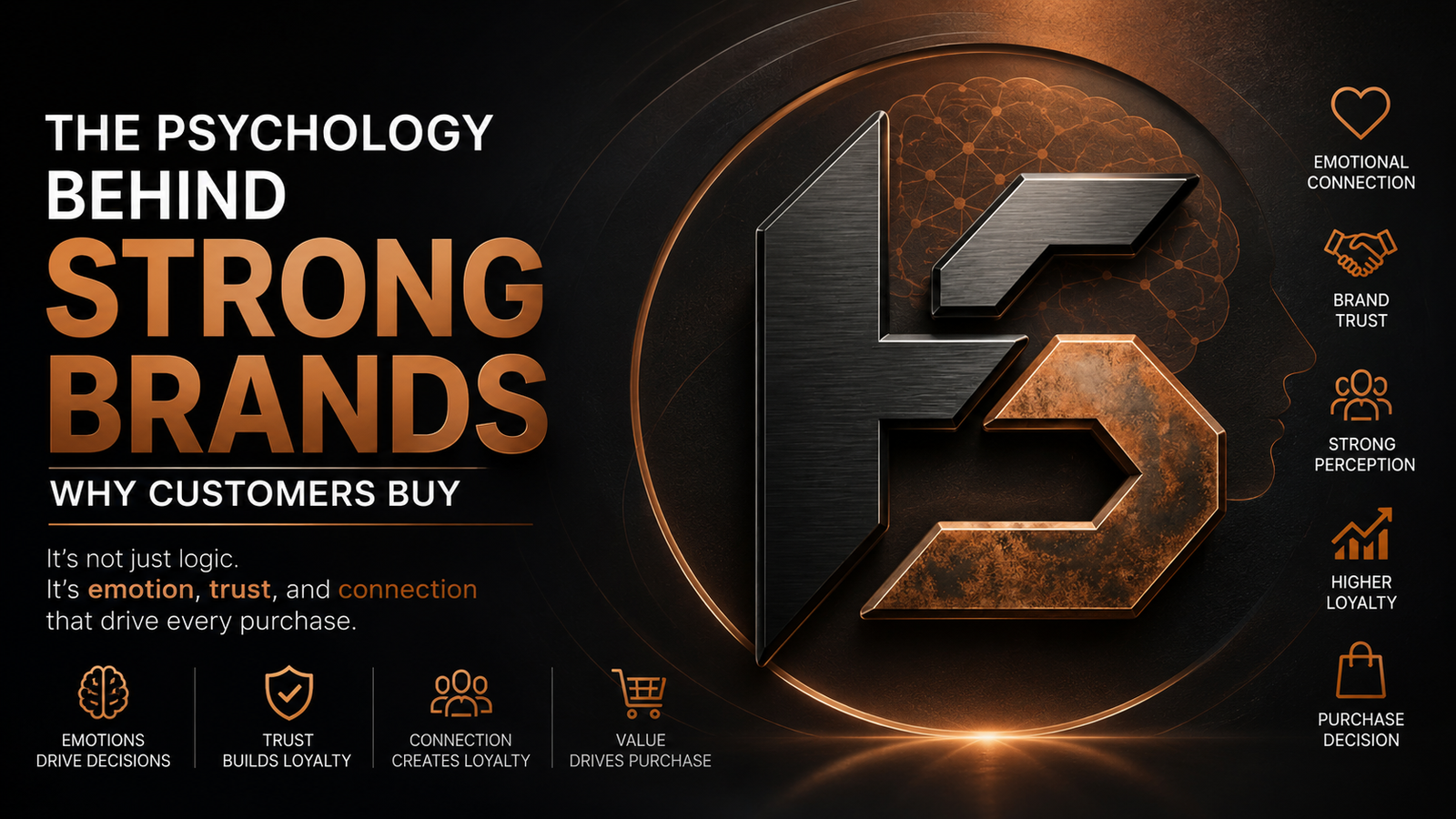

The Psychology Behind Strong Brands: Why Customers Buy
Every day, consumers make hundreds of purchasing decisions.How Brand Psychology Influences Customer Decisions
Some decisions are logical and carefully researched, while others happen almost instantly. Yet behind nearly every purchase lies a powerful force that many businesses overlook—the psychology of branding.
Why do customers willingly pay more for certain brands?
Why do people remain loyal to one company even when competitors offer similar products?
Why do some businesses become household names while others struggle to gain recognition?
The answer often lies in brand psychology.Why Brand Psychology Builds Customer Trust
Strong brands don’t simply sell products or services. They create emotional connections, build trust, influence perceptions, and shape customer behavior.
Understanding the psychology behind strong brands can help businesses attract more customers, improve loyalty, and create sustainable growth.
In this guide, we’ll explore how branding influences purchasing decisions and why customers choose certain brands over others.
What Is Brand Psychology?
Brand psychology is the study of how branding influences customer thoughts, emotions, perceptions, and purchasing behavior.
It focuses on understanding how people:
Perceive brands
Form emotional connections
Develop trust
Make buying decisions
Become loyal customers
Successful brands understand that customers often buy based on emotion first and justify their decisions with logic later.
This is why branding plays such an important role in business growth.
Why Customers Don’t Buy Products Alone
Many businesses believe customers purchase products because of features and specifications.
While features matter, research consistently shows that emotions strongly influence buying decisions.
People often buy:
Confidence
Status
Security
Convenience
Belonging
Trust
For example:
People don’t buy a luxury watch solely to tell time.
They buy prestige, success, and identity.
People don’t choose a coffee brand only for taste.
They buy an experience and emotional connection.
Strong brands understand this psychology and position themselves accordingly.How Brand Psychology Influences Customer Decisions
The Role Of Emotions In Purchasing Decisions
Emotions influence nearly every buying decision.
When customers connect emotionally with a brand, they are more likely to:
Trust the business
Make repeat purchases
Recommend the brand
Remain loyal over time
Common emotional triggers include:
Trust
Customers prefer brands they believe are reliable and consistent.
Security
People often buy products that reduce risk or uncertainty.
Happiness
Positive emotions increase brand preference.
Belonging
Customers enjoy being part of communities and movements.
Achievement
Many purchases are tied to personal success and aspirations.
Strong brands intentionally create experiences that trigger these emotions.
How Strong Brands Build Trust
Trust is one of the most important factors in consumer behavior.Why Brand Psychology Builds Customer Trust
Without trust, customers hesitate to buy.
Strong brands build trust through:
Consistency
Consistent messaging, design, and customer experiences create familiarity.
Transparency
Customers appreciate honesty and authenticity.
Social Proof
Reviews, testimonials, and case studies reinforce credibility.
Expertise
Brands that demonstrate knowledge are viewed as more trustworthy.
When trust increases, buying resistance decreases.
The Power Of Brand Recognition
Customers naturally gravitate toward brands they recognize.
This psychological principle is known as the “mere exposure effect.”
The more frequently people encounter a brand, the more familiar and trustworthy it becomes.
This is why successful businesses invest heavily in:
Content Marketing
SEO
Social Media
Advertising
Brand Consistency
Recognition creates comfort, and comfort often leads to purchases.
Why Brand Identity Influences Buying Decisions
Brand identity shapes how customers perceive a business.
Elements such as:
Logo
Color Palette
Typography
Messaging
Website Design
all contribute to customer perceptions.
A professional brand identity signals:
Quality
Credibility
Reliability
An inconsistent or outdated identity can create doubt and reduce conversions.
The Psychology Of Brand Loyalty
Brand loyalty goes beyond customer satisfaction.
Loyal customers often feel emotionally connected to a brand.
This connection creates:
Repeat purchases
Higher customer lifetime value
Increased referrals
Reduced sensitivity to price
Loyalty develops when customers consistently receive positive experiences and feel aligned with a brand’s values.
How Strong Brands Create Emotional Connections
Storytelling
People remember stories more than facts.
Successful brands use storytelling to communicate:
Purpose
Mission
Values
Customer success
Stories make brands more relatable and memorable.How Brand Psychology Influences Customer Decisions
Shared Values
Modern consumers increasingly support businesses that reflect their beliefs and values.
Brands that clearly communicate their purpose often build stronger emotional connections.
Personalization
Customers want experiences tailored to their needs.
Personalized marketing and communication improve engagement and strengthen relationships.
The Psychology Of Social Proof
People often look to others when making decisions.
This behavior is known as social proof.
Examples include:
Customer Reviews
Testimonials
Ratings
Case Studies
Influencer Recommendations
Social proof reduces uncertainty and increases trust.
When potential customers see others having positive experiences, they become more confident in their purchasing decisions.
Why Strong Brands Can Charge Higher Prices
Many customers associate strong brands with higher value.
This allows businesses to compete on value rather than price.
Brand strength influences perceptions of:
Quality
Expertise
Reliability
Prestige
As a result, customers are often willing to pay more for brands they trust.
https://blog.hubspot.com/marketing/branding?utm
Common Branding Mistakes That Hurt Customer Trust
Inconsistent Branding
Mixed messages create confusion.
Weak Positioning
Customers should immediately understand what makes your brand unique.
Poor Customer Experience
Negative experiences quickly damage trust.
Lack Of Authenticity
Modern consumers can easily identify brands that feel insincere.
Strong branding requires consistency and authenticity.Why Brand Psychology Builds Customer Trust
How Businesses Can Apply Brand Psychology
Understand Your Audience
Identify:
Needs
Goals
Challenges
Motivations
Understanding customer psychology is the foundation of effective branding.
Create Consistent Experiences
Every touchpoint should reinforce your brand identity.
Focus On Emotions
Customers remember how brands make them feel.
Design experiences that create positive emotional responses.
Build Trust Continuously
Trust is earned over time through consistent actions and communication.
Develop A Strong Brand Story
A compelling story helps customers connect with your business on a deeper level.
The Future Of Brand Psychology
Consumer expectations continue to evolve.
Future-focused brands are investing in:
Personalization
Customer Experience
Community Building
Emotional Branding
AI-Powered Customer Insights
Businesses that understand customer psychology will continue to gain competitive advantages.How Brand Psychology Influences Customer Decisions. The Future of Brand Psychology in Digital Marketing
Final Thoughts
The psychology behind strong brands goes far beyond logos, slogans, and advertising.
Successful brands understand how customers think, feel, and make decisions.
They build trust, create emotional connections, and establish memorable experiences that influence purchasing behavior.
Customers rarely buy based on logic alone.The Future of Brand Psychology in Digital Marketing
They buy from brands they trust, recognize, and connect with emotionally.
Businesses that understand and apply brand psychology can strengthen customer relationships, improve loyalty, increase conversions, and achieve sustainable growth.
In an increasingly competitive marketplace, understanding why customers buy may be one of the most valuable advantages a business can possess.