
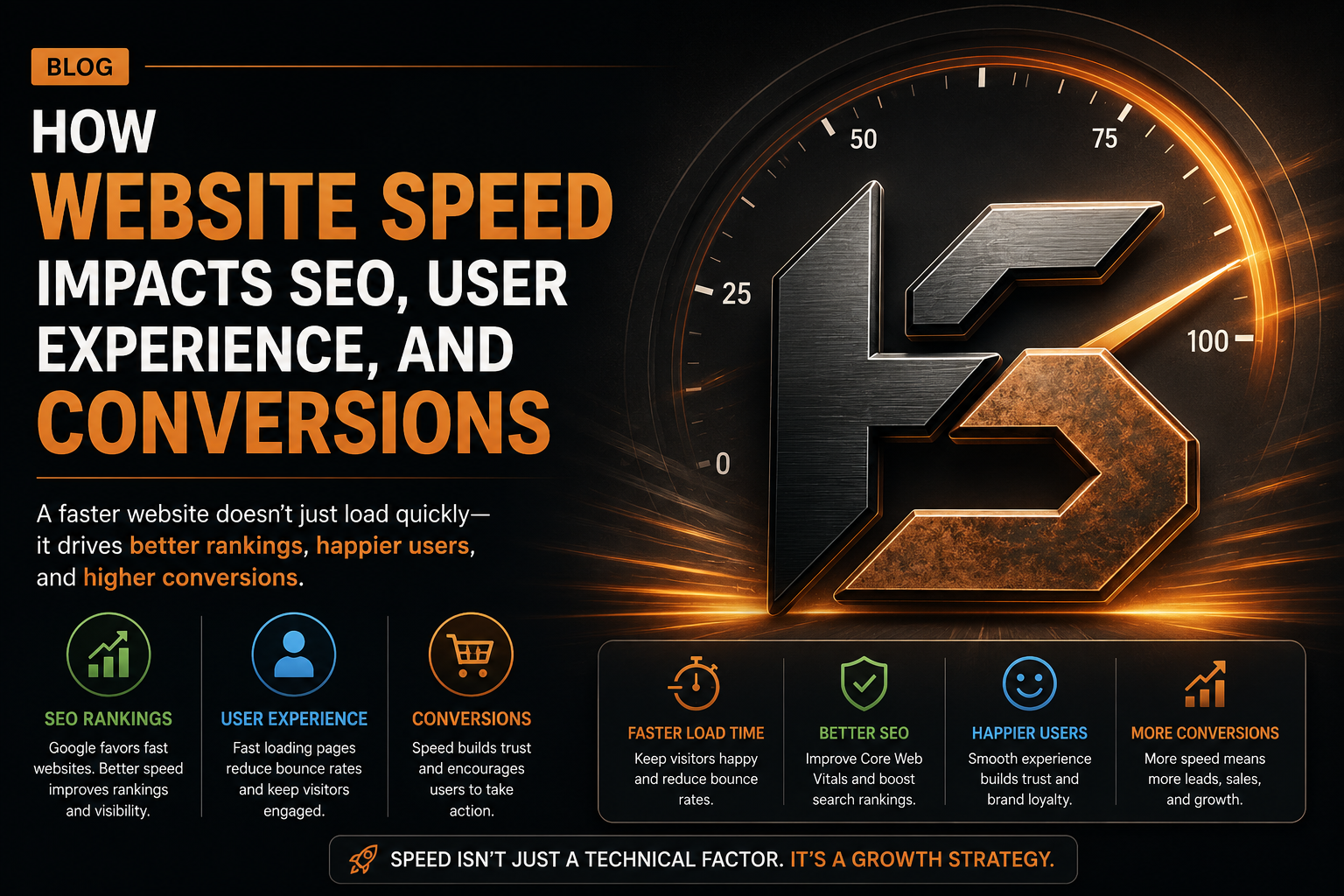

How Website Speed Impacts SEO, User Experience, And Conversions
In today’s digital landscape, speed matters more than ever. Modern internet users expect websites to load almost instantly. Whether someone is browsing on a desktop, smartphone, or tablet, slow-loading websites often result in frustration and abandonment.
For businesses, website speed is no longer just a technical consideration. It directly affects search engine rankings, user experience, lead generation, and revenue.
A website that loads quickly can improve engagement, build trust, and increase conversions. On the other hand, a slow website can drive visitors away before they even see your products or services.
Google has repeatedly emphasized the importance of page speed as a ranking factor, making website speed optimization essential for businesses that want to compete online.
In this guide, we’ll explore how website speed impacts SEO, user experience, and conversions, and why improving website performance should be a priority for every business.
What Is Website Speed?
Website speed refers to how quickly a webpage loads and becomes usable for visitors.
It includes factors such as:
-
Page Load Time
-
Server Response Time
-
First Contentful Paint (FCP)
-
Largest Contentful Paint (LCP)
-
Time To Interactive (TTI)
-
Core Web Vitals
A fast website delivers content quickly and allows users to interact without delays.
Why Website Matters
Users expect websites to load in just a few seconds.
Research consistently shows that even a one-second delay can significantly reduce engagement and conversions.
Website speed affects:
-
Search Rankings
-
User Satisfaction
-
Conversion Rates
-
Bounce Rates
-
Brand Perception
-
Customer Retention
Businesses that prioritize website speed often gain a competitive advantage.
How Website Speed Impacts SEO
Google Uses Website Speed As A Ranking Factor
Google wants to provide users with the best possible experience.
Fast-loading websites help achieve that goal.
As a result, website speed plays an important role in search engine optimization (SEO).
Websites that load faster often perform better in search rankings compared to slower competitors.
Core Web Vitals Influence Rankings
Google’s Core Web Vitals measure key aspects of user experience.
These include:
Largest Contentful Paint (LCP)
Measures loading performance.
First Input Delay (FID)
Measures responsiveness.
Cumulative Layout Shift (CLS)
Measures visual stability.
Strong Core Web Vitals scores can improve SEO performance and visibility.
Faster Crawling And Indexing
Search engines use bots to crawl websites.
Fast websites allow search engines to crawl more pages efficiently.
This can improve indexing and increase visibility in search results.
How Website Speed Impacts User Experience
First Impressions Matter
Users often form opinions about websites within seconds.
A slow website creates a negative first impression.
Visitors may perceive the business as:
-
Outdated
-
Unprofessional
-
Unreliable
Fast websites create confidence and trust.
Reduced Bounce Rates
Bounce rate refers to visitors leaving a website without interacting.
Slow loading times are one of the biggest causes of high bounce rates.
Users rarely wait for slow websites to load.
When pages load quickly, visitors are more likely to stay and explore.
Improved Engagement
Fast websites encourage users to:
-
Read More Content
-
View Additional Pages
-
Watch Videos
-
Complete Forms
-
Make Purchases
Better engagement often leads to stronger business results.
Better Mobile Experience
Most online traffic now comes from mobile devices.
Mobile users often rely on slower network connections.
Website speed becomes even more important for mobile experiences.
Fast mobile websites improve:
-
Accessibility
-
Engagement
-
Conversion Rates
Google also prioritizes mobile performance in rankings.
How Website Speed Impacts Conversions
Faster Websites Generate More Leads
Conversion rate refers to the percentage of visitors who complete a desired action.
Examples include:
-
Filling Out Contact Forms
-
Requesting Quotes
-
Scheduling Consultations
-
Making Purchases
Slow websites often interrupt the customer journey before conversions occur.
Improved Customer Trust
Trust plays a major role in conversion optimization.
Visitors are more likely to trust businesses with fast, professional websites.
A smooth experience reduces friction and encourages action.
Better E-Commerce Performance
Website speed is especially important for online stores.
Every second matters.
Slow product pages can result in:
-
Cart Abandonment
-
Lost Sales
-
Reduced Customer Satisfaction
Fast websites create smoother shopping experiences and improve revenue.
Higher Return On Marketing Investment
Businesses spend significant budgets on:
-
SEO
-
Google Ads
-
Social Media Marketing
-
Content Marketing
If visitors arrive at a slow website, marketing efforts become less effective.
Optimizing website speed helps maximize return on investment (ROI).
Common Causes Of Slow Website Speed
Large Images
Unoptimized images are one of the biggest performance issues.
Poor Hosting
Low-quality hosting providers can significantly impact website performance.
Excessive Plugins
Too many plugins increase loading times and server requests.
Unoptimized Code
Bloated code can slow page rendering.
Lack Of Caching
Without caching, websites repeatedly load the same resources.
How To Improve Website Speed
Optimize Images
Compress and resize images before uploading.
Use modern formats like WebP whenever possible.
Use High-Performance Hosting
Invest in reliable hosting designed for speed and performance.
Enable Caching
Caching stores website resources and reduces loading times for returning visitors.
Minimize Plugins
Remove unnecessary plugins and keep essential tools updated.
Optimize Website Code
Reduce unnecessary CSS, JavaScript, and HTML.
Cleaner code improves performance.
Use A Content Delivery Network (CDN)
A CDN distributes website content across multiple servers worldwide.
This helps deliver content faster to users in different locations.
Website Speed And Core Web Vitals
Core Web Vitals have become a major focus for website owners.
Businesses should regularly monitor:
-
Loading Performance
-
Responsiveness
-
Visual Stability
Tools like Google PageSpeed Insights can help identify improvement opportunities.
Strong Core Web Vitals contribute to better SEO and user experiences.
Measuring Website Speed
Useful tools include:
-
Google PageSpeed Insights
-
GTmetrix
-
Pingdom Website Speed Test
-
Google Search Console
-
Lighthouse
Regular testing helps identify bottlenecks before they impact business performance.
https://pagespeed.web.dev/?utm
Long-Term Benefits Of Website Speed Optimization
Businesses that prioritize website speed often experience:
-
Higher SEO Rankings
-
Better User Experiences
-
Lower Bounce Rates
-
Increased Lead Generation
-
Higher Conversion Rates
-
Stronger Brand Trust
-
Improved Revenue Growth
Website speed optimization delivers benefits across every stage of the customer journey.
Final Thoughts
Website speed is one of the most important factors affecting online success.
It directly impacts SEO rankings, user experience, customer satisfaction, and conversion rates.
A slow website can silently reduce traffic, engagement, and revenue, while a fast website creates positive experiences that encourage users to stay, explore, and take action.
Businesses that invest in website optimization gain a competitive advantage, improve marketing performance, and generate more leads and sales.
In today’s fast-paced digital world, website speed isn’t just a technical metric—it’s a critical business growth factor.