

What Is GEO (Generative Engine Optimization) And Why It Matters
The digital marketing landscape is evolving faster than ever. For years, businesses focused on Search Engine Optimization (SEO) to improve visibility on search engines like Google and Bing. However, the rise of Artificial Intelligence (AI) platforms such as ChatGPT, Gemini, Claude, and Perplexity has introduced a new way people find information online.
Instead of browsing through multiple search results, users are increasingly asking AI tools direct questions and receiving instant answers. This shift has created a new optimization strategy called Generative Engine Optimization (GEO).
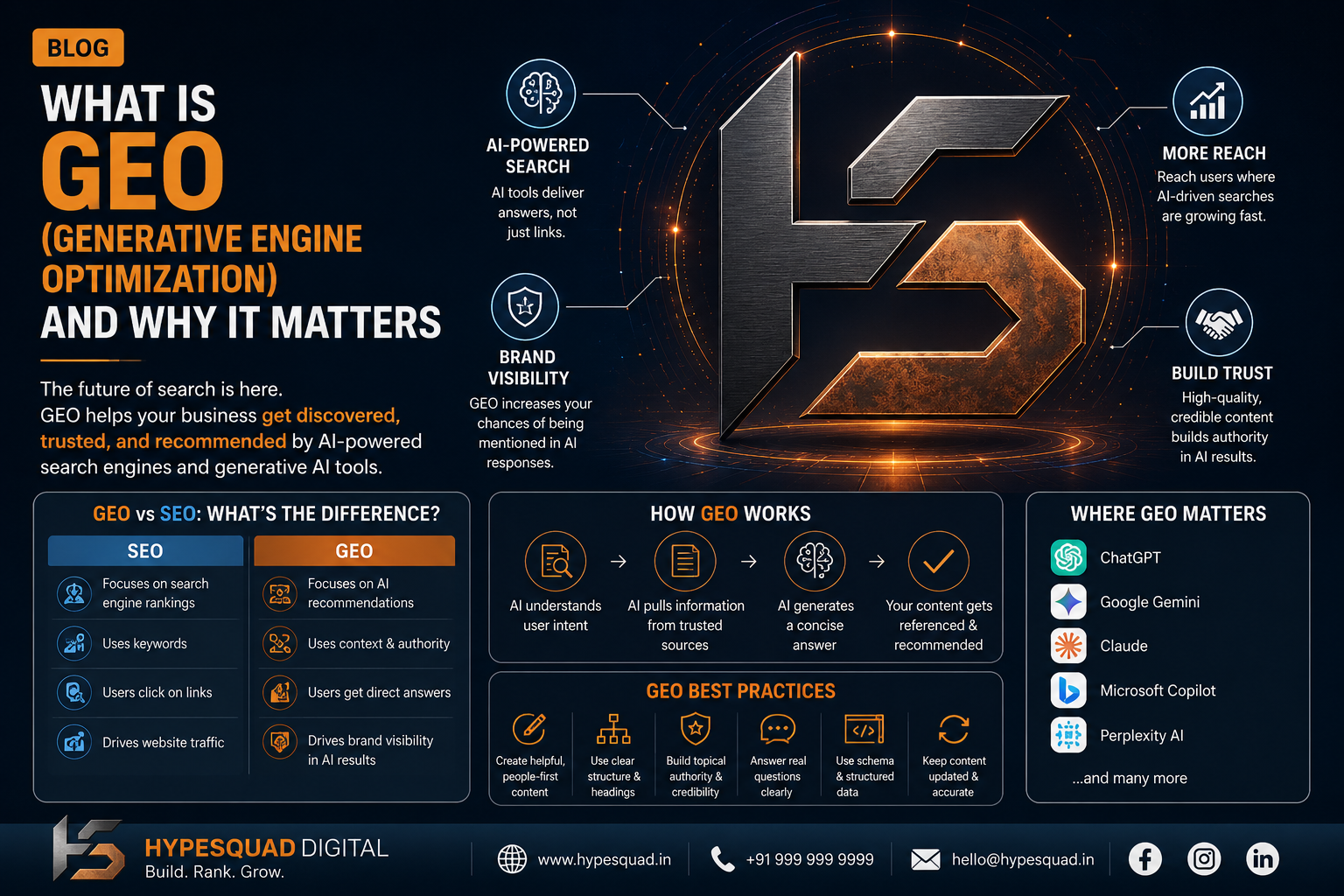
Generative Engine Optimization helps businesses ensure that their content, products, services, and brand information are accurately discovered, referenced, and recommended by AI-powered search engines and generative AI platforms.
In this article, we’ll explore what GEO is, how it differs from traditional SEO, why it matters for modern businesses, and how you can implement GEO strategies to stay ahead of the competition.
What Is Generative Engine Optimization (GEO)?
Generative Engine Optimization (GEO) is the process of optimizing digital content so that AI-powered search engines and generative AI tools can easily understand, reference, and recommend it in their responses.
Unlike traditional search engines that display a list of links, generative engines create direct answers by analyzing information from multiple sources.
Examples include:
- ChatGPT
- Google Gemini
- Microsoft Copilot
- Claude AI
- Perplexity AI
- Meta AI
When a user asks:
“What are the best digital marketing agencies for small businesses?”
An AI tool may provide a direct answer instead of showing ten blue links.
If your content is properly optimized for GEO, your business has a higher chance of being mentioned in those AI-generated responses.
GEO vs SEO: What’s The Difference?
| SEO | GEO |
|---|---|
| Optimizes for search engines | Optimizes for AI-powered engines |
| Focuses on rankings | Focuses on AI recommendations |
| Targets keywords | Targets context and authority |
| Users click search results | Users receive direct answers |
| Improves website traffic | Improves AI visibility and brand mentions |
Traditional SEO aims to get your website ranked higher on search engines.
Generative Engine Optimization aims to make your content trustworthy enough for AI systems to use as a source when generating answers.
The future belongs to businesses that combine both strategies.
Why GEO Matters More Than Ever
1. AI Search Is Growing Rapidly
Millions of users now rely on AI assistants for information, recommendations, and purchasing decisions.
Instead of searching:
“Best CRM software for startups”
People ask:
“What CRM should a startup use?”
The AI generates an answer instantly.
If your business is not visible in AI-generated responses, you’re missing a growing segment of potential customers.
2. User Behavior Is Changing
Modern users want quick answers.
They don’t always want to:
- Open multiple websites
- Compare dozens of articles
- Read long pages
AI provides summarized responses in seconds.
Businesses that optimize for GEO position themselves where customers are increasingly spending their attention.
3. Brand Authority Matters More
Generative AI prioritizes trustworthy sources.
The stronger your online authority, the more likely AI systems are to reference your content.
This means GEO rewards:
- High-quality content
- Industry expertise
- Credibility
- Consistency
4. Early Adoption Creates Competitive Advantages
Many businesses still focus solely on SEO.
Companies implementing GEO today can gain visibility before the competition catches up.
Being an early adopter often means:
- More brand mentions
- Higher authority
- Increased trust
- Better digital presence
How Generative AI Chooses Content
Understanding how AI engines select information is essential for GEO.
Generative AI typically looks for:
Relevant Information
Content must directly answer user questions.
Authority
AI prefers trusted and credible sources.
Accuracy
Well-researched and factual content performs better.
Structure
Clear headings and organized content help AI understand information.
Freshness
Updated content is more likely to be referenced.
Key GEO Strategies For Businesses
Create Helpful Content
The foundation of GEO is useful content.
Focus on solving real user problems.
Examples:
- How-to guides
- Tutorials
- Industry insights
- Case studies
- FAQs
The more value your content provides, the more likely AI systems will use it.
Use Clear Content Structure
AI tools prefer organized content.
Use:
- H1 headings
- H2 subheadings
- Bullet points
- Numbered lists
- Tables
- FAQs
Well-structured content improves readability for both users and AI systems.
Build Topical Authority
Instead of publishing random articles, focus on becoming an expert in your niche.
For example, a digital marketing agency could create content around:
- SEO
- GEO
- Branding
- Website Development
- Social Media Marketing
- PPC Advertising
This creates strong topical authority.
Publish Original Insights
AI systems value unique information.
Consider publishing:
- Industry reports
- Survey results
- Case studies
- Research findings
Original content helps establish authority and increases the likelihood of being referenced.
Optimize For Conversational Queries
People interact with AI differently than search engines.
Traditional Search:
“best website design company”
AI Query:
“Which website design company is best for small businesses?”
Create content that naturally answers conversational questions.
Add FAQ Sections
FAQs are highly valuable for GEO.
What Is Generative Engine Optimization?
Generative Engine Optimization is the practice of optimizing content so AI-powered search engines can understand and recommend it in generated responses.
Why Is GEO Important?
GEO improves visibility in AI-generated answers, helping businesses reach more potential customers.
Strengthen Your Brand Presence
AI tools often recognize brands with strong digital footprints.
Improve your visibility through:
- Blog content
- Social media
- Guest posts
- Industry directories
- Press mentions
The stronger your online presence, the greater your GEO potential.
GEO Best Practices For Business Websites
To maximize visibility in AI-powered search engines, businesses should follow proven Generative Engine Optimization (GEO) best practices. These strategies help AI systems better understand, trust, and recommend your content.
Maintain Content Accuracy
Incorrect or outdated information can reduce trust signals and negatively impact your online credibility. Regularly review and update your website to ensure all information remains accurate and relevant.
Keep the following information updated:
- Statistics
- Services
- Product Information
- Pricing
- Contact Details
Use Schema Markup
Structured data helps search engines and AI systems better understand your website content, improving machine readability and increasing the chances of appearing in AI-generated responses.
Useful schema types include:
- Organization
- Local Business
- FAQ
- Article
- Review
Implementing the right schema enhances both SEO and GEO performance.
Improve Website Performance
Website speed and overall performance continue to play an important role in user experience and search visibility.
A fast website helps improve:
- User Experience
- Search Visibility
- Content Accessibility
Optimizing website performance ensures visitors and AI crawlers can access your content quickly and efficiently.
Build Trust Signals
Trust signals increase your brand’s credibility and improve the likelihood of your business being referenced by AI platforms.
Include elements such as:
- Customer Testimonials
- Verified Reviews
- Certifications
- Awards
- Client Logos
These elements demonstrate authority and help establish long-term trust.
GEO For Local Businesses
Local businesses can benefit significantly from Generative Engine Optimization by making it easier for AI tools to recommend their services to nearby customers.
For example, a user might ask:
“Who offers website development services near me?”
AI systems are more likely to recommend businesses that have:
- Optimized Websites
- Accurate Business Information
- Strong Customer Reviews
- Relevant Local Content
Local GEO optimization improves visibility, builds trust, and generates more qualified leads.
Common GEO Mistakes To Avoid
Publishing Thin Content
Short or low-value content rarely becomes a trusted AI source. Publish detailed, informative, and user-focused content that provides genuine value.
Ignoring Content Updates
Outdated information reduces credibility. Refresh your content regularly to maintain accuracy and authority.
Keyword Stuffing
Modern AI systems prioritize context over keyword repetition. Write naturally while focusing on answering user intent.
Lack Of Expertise
Generic content is less likely to be referenced. Demonstrate real industry knowledge, experience, and expertise throughout your content.
Poor Website Experience
A slow, cluttered, or difficult-to-use website can reduce both user engagement and AI visibility. Focus on usability, mobile responsiveness, and fast loading speeds.
The Future Of GEO
Generative AI is rapidly changing how people discover businesses, products, and services online. As AI adoption continues to grow, GEO will become an essential part of every digital marketing strategy.
Future trends include:
- AI-Powered Search Experiences
- Personalized Recommendations
- Conversational Commerce
- Voice Search
- Real-Time AI Assistance
Businesses that prepare today will be better positioned to compete in tomorrow’s AI-driven digital landscape.
Rather than replacing SEO, GEO complements it by extending your visibility beyond traditional search engines.
The most successful businesses will combine:
- Search Engine Optimization (SEO)
- Generative Engine Optimization (GEO)
- Content Marketing
- Brand Building
- Excellent User Experience
Together, these strategies create a strong and future-ready digital presence.
Conclusion
Generative Engine Optimization (GEO) represents the next evolution of digital visibility. As AI-powered search tools become increasingly popular, businesses must adapt their content strategies to remain discoverable and competitive.
By creating high-quality content, demonstrating expertise, answering user questions clearly, and maintaining a strong online presence, businesses can significantly improve their chances of being referenced by AI-powered platforms.
Organizations that embrace GEO today will gain a valuable competitive advantage as search continues to evolve.
If SEO helped businesses succeed in traditional search, GEO will help businesses thrive in the era of AI-driven discovery. The future of online visibility is no longer just about ranking higher—it’s about becoming the trusted source that AI chooses to recommend.