
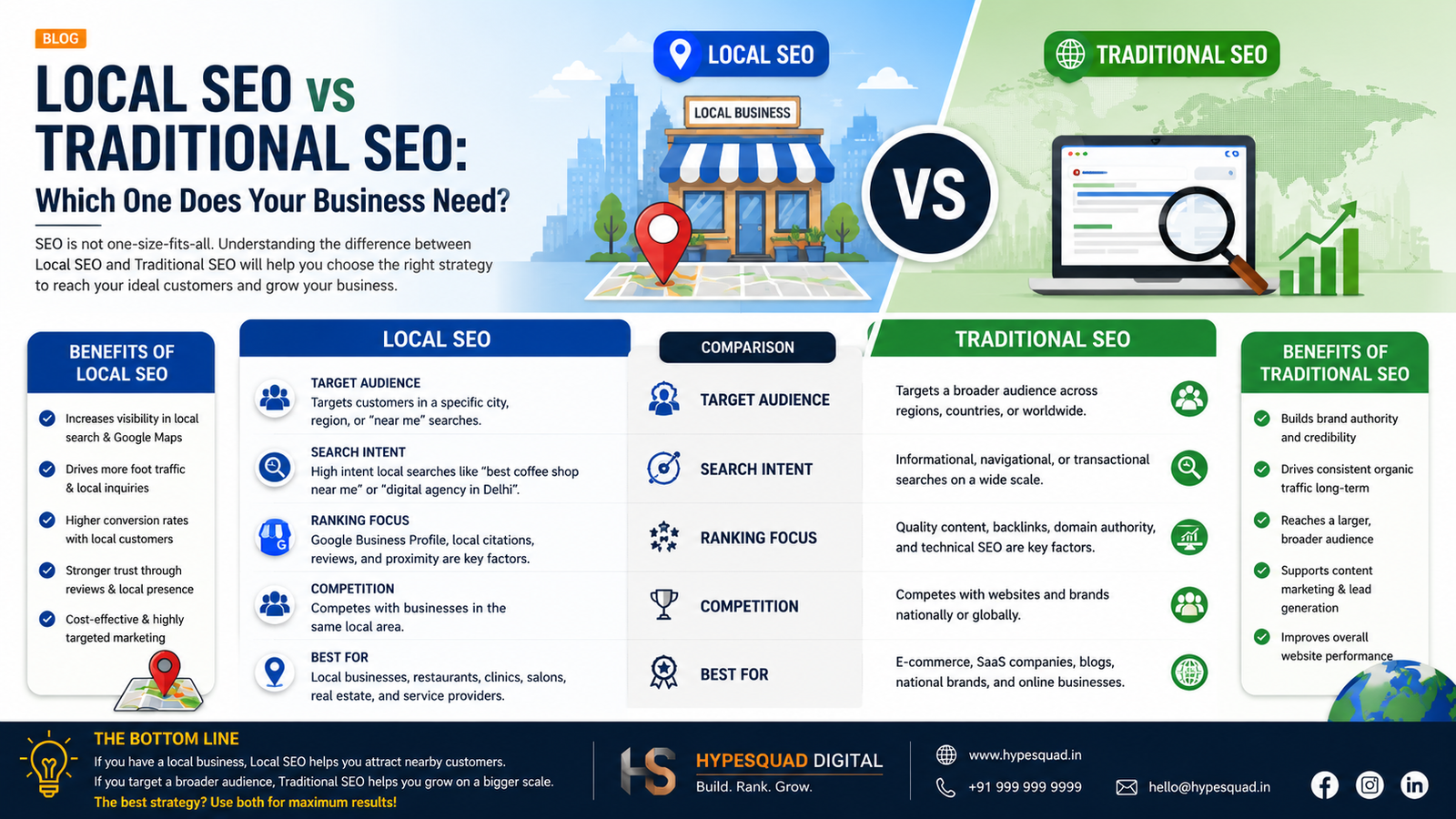

Local SEO vs Traditional SEO: Which One Does Your Business Need?
In today's digital world, having an online presence is no longer optional for businesses. Whether you own a local restaurant, a service-based company, an eCommerce store, or a growing brand, search engine optimization (SEO) plays a critical role in helping customers find you online.
However, not all SEO strategies are the same. Two of the most commonly discussed approaches are Local SEO and Traditional SEO. While both aim to improve visibility on search engines like Google, they serve different purposes and target different audiences.
Understanding the difference between Local SEO vs Traditional SEO can help you invest your marketing budget wisely and achieve better results. In this guide, we'll explore how each strategy works, their benefits, and which one is best for your business.
What Is SEO?
Search Engine Optimization (SEO) is the process of improving a website's visibility in search engine results. The goal is to attract organic traffic by making your website more relevant, authoritative, and user-friendly.
SEO involves multiple factors, including:
- Keyword optimization
- Quality content creation
- Technical website improvements
- Backlink building
- User experience optimization
- Mobile responsiveness
Depending on your business goals, you may need either Local SEO, Traditional SEO, or a combination of both.
What Is Local SEO?
Local SEO focuses on optimizing your online presence to attract customers from a specific geographic area.
For example, when someone searches:
- Web design company near me
- Best digital marketing agency in Delhi
- Coffee shop in Mumbai
Google prioritizes local businesses that are relevant to the user's location.
Local SEO helps businesses appear in:
- Google Maps
- Google Business Profile listings
- Local search results
- Location-based searches
Key Components of Local SEO
Google Business Profile Optimization
A fully optimized Google Business Profile helps your business appear in local search results and Google Maps.
Local Keywords
Using location-specific keywords such as:
- Website development services in Delhi
- Digital marketing agency in Mumbai
- Branding company in Bangalore
helps search engines understand your service area.
Customer Reviews
Positive reviews improve credibility and local rankings.
Local Citations
Listing your business on trusted directories strengthens local authority.
Location Pages
Businesses serving multiple locations should create dedicated pages for each city or area.
What Is Traditional SEO?
Traditional SEO focuses on improving visibility across broader search results without geographic limitations.
The goal is to rank for industry-specific keywords and attract visitors from anywhere in the world.
Examples include:
- Website design tips
- SEO strategies for businesses
- Branding and marketing guide
- Content marketing best practices
Traditional SEO is ideal for businesses that sell products or services nationally or globally.
Key Components of Traditional SEO
Keyword Research
Identifying high-value search terms relevant to your industry.
Content Marketing
Publishing informative blogs, guides, and resources that answer user questions.
Technical SEO
Improving website speed, security, mobile responsiveness, and crawlability.
Link Building
Earning backlinks from authoritative websites to increase trust and rankings.
On-Page SEO
Optimizing titles, headings, meta descriptions, images, and internal links.
Local SEO vs Traditional SEO: Major Differences
Target Audience
Local SEO:
Targets customers in a specific city, region, or service area.
Traditional SEO:
Targets users regardless of their location.
Search Intent
Local SEO:
Focuses on immediate purchase intent and location-based searches.
Traditional SEO:
Focuses on broader informational, commercial, and transactional searches.
Competition
Local SEO:
Competes with businesses in the same geographic area.
Traditional SEO:
Competes with businesses nationwide or globally.
Ranking Factors
Local SEO:
Relies heavily on Google Business Profile, reviews, local citations, and
proximity.
Traditional SEO:
Depends more on content quality, backlinks, technical SEO, and domain authority.
Benefits of Local SEO
- Increased Local Visibility: Your business appears when nearby customers search for your products or services.
- Higher Conversion Rates: Local searches often indicate strong buying intent.
- Improved Google Maps Presence: Customers can easily find directions, contact information, and business hours.
- Cost-Effective Marketing: Local SEO often delivers better ROI compared to traditional advertising.
- Enhanced Customer Trust: Positive reviews and accurate business information increase credibility.
Benefits of Traditional SEO
- Wider Reach: Reach customers nationwide or globally.
- Long-Term Traffic Growth: High-ranking content can generate traffic for years.
- Stronger Brand Authority: Educational content positions your business as an industry expert.
- More Lead Generation Opportunities: Broad keyword targeting attracts users at different stages of the buying journey.
- Better Competitive Advantage: Consistent SEO efforts help outperform competitors.
Which Businesses Need Local SEO?
Local SEO is ideal for:
- Restaurants
- Cafes
- Hotels
- Medical Clinics
- Dentists
- Law Firms
- Real Estate Agencies
- Home Service Providers
- Local Retail Stores
- Digital Agencies Serving Specific Cities
If customers visit your location or you serve a particular area, Local SEO should be a priority.
Which Businesses Need Traditional SEO?
Traditional SEO works best for:
- eCommerce Websites
- SaaS Companies
- Online Education Platforms
- National Brands
- Content Publishers
- Technology Companies
- Global Service Providers
If your audience is not limited to one location, Traditional SEO can help you reach a much larger market.
Can Businesses Use Both?
Absolutely. Many businesses benefit from combining Local SEO and Traditional SEO.
For example, a digital marketing agency may:
- Use Local SEO to attract clients in nearby cities.
- Use Traditional SEO to publish industry blogs and reach a broader audience.
This combined approach maximizes visibility, traffic, and lead generation opportunities.
Best Practices for Local SEO
- Optimize your Google Business Profile.
- Encourage customer reviews.
- Use location-based keywords.
- Create local landing pages.
- Maintain consistent business information across directories.
- Add local business schema markup.
Best Practices for Traditional SEO
- Publish high-quality content regularly.
- Perform comprehensive keyword research.
- Improve website speed and mobile usability.
- Build authoritative backlinks.
- Optimize title tags and meta descriptions.
- Strengthen internal linking structure.
The Future of SEO
As search engines become smarter and AI-powered search grows, businesses must focus on providing valuable, user-focused content.
Success depends on:
- Relevance
- Trustworthiness
- User Experience
- Helpful Content
- Technical Optimization
Conclusion
When comparing Local SEO vs Traditional SEO, there is no one-size-fits-all answer. The right choice depends on your business goals, audience, and service area.
If your customers are located within a specific city or region, Local SEO can help drive qualified leads and increase foot traffic. If you're targeting a broader audience across multiple locations, Traditional SEO is the better option.
For many businesses, combining both approaches is the most effective strategy to maximize visibility, attract more customers, and achieve sustainable growth.
Investing in the right SEO strategy today can create long-term success and help your business stay ahead of the competition.