

Reading Time: 10–12 Minutes
Table of Contents
- Introduction
- What Is Branding?
- What Is Marketing?
- Branding vs Marketing: Understanding the Difference
- Key Differences Between Branding and Marketing
- Why Branding Comes Before Marketing
- Real-World Examples
- Why Your Business Needs Both
- Conclusion (Continued in Part 2)
Branding vs Marketing
Many people use the terms branding and marketing interchangeably. While they are closely connected, they serve very different purposes in building a successful business. Understanding the difference between branding and marketing is essential for entrepreneurs, startups, small businesses, and established companies that want to grow sustainably.
Think of your favorite brands for a moment. Chances are you recognize their logo, colors, messaging, and even the emotions they evoke before you think about the products they sell. That’s the power of branding. On the other hand, the advertisements, social media campaigns, blog articles, and email promotions that introduced you to those brands are all part of marketing.
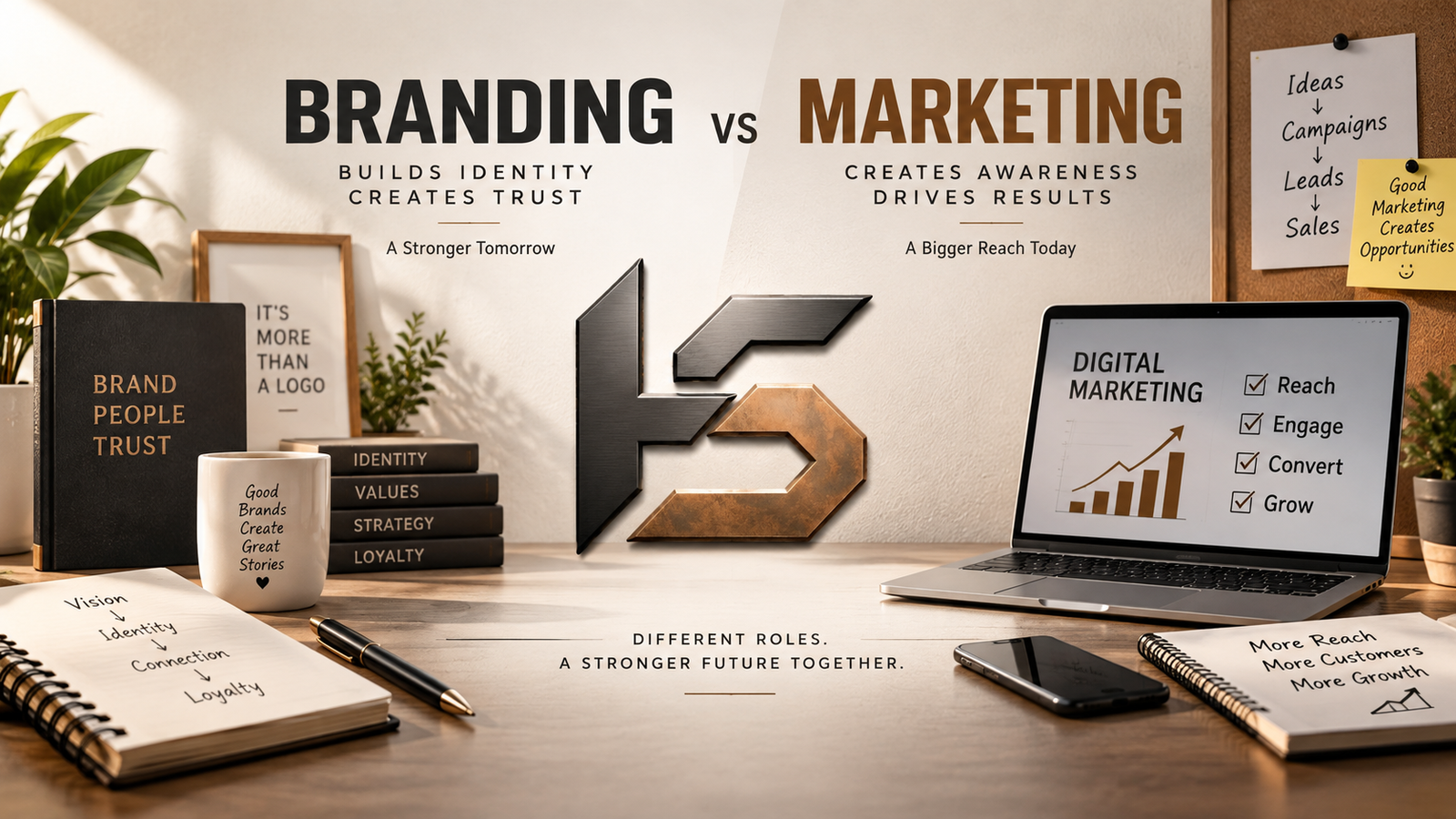
In today’s highly competitive digital world, having a great product alone isn’t enough. Customers buy from businesses they know, trust, and remember. Branding creates that trust and emotional connection, while marketing helps communicate your value and attract the right audience. Branding vs Marketing
In this guide, you’ll learn the difference between branding and marketing, how they work together, and why every business needs both to succeed in 2026.
What Is Branding?
Branding is the process of creating a unique identity for your business. It defines how customers perceive your company, what your business stands for, and the emotions people associate with your products or services.
A strong brand goes beyond a logo or a color palette. It represents your mission, values, personality, and the promise you make to your customers.
Key elements of branding include:
- Brand name
- Logo and visual identity
- Brand colors and typography
- Brand voice and messaging
- Mission and vision
- Core values
- Customer experience
- Brand positioning
For example, when customers instantly recognize a company by its design style, messaging, or customer service, that’s the result of consistent branding.
A strong brand helps businesses:
- Build trust
- Increase recognition
- Create customer loyalty
- Differentiate from competitors
- Support premium pricing
Branding answers one important question: Branding vs Marketing
“Who are you as a business?”
What Is Marketing?
Marketing is the process of promoting your products or services to attract, engage, and convert potential customers.
While branding shapes your identity, marketing ensures people discover your business.
Marketing includes a wide range of activities, such as:
- Search Engine Optimization (SEO)
- Content Marketing
- Social Media Marketing
- Email Marketing
- Google Ads (PPC)
- Video Marketing
- Influencer Marketing
- Public Relations (PR)
- Events and Promotions
Marketing focuses on generating awareness, traffic, leads, and sales.
A successful marketing strategy helps businesses:
- Reach the right audience
- Generate qualified leads
- Increase website traffic
- Improve conversions
- Boost revenue
- Retain customers
Marketing answers another important question:
“How will people discover your business?” Branding vs Marketing
Branding vs Marketing: Understanding the Difference
Although branding and marketing work together, they are not the same.
| Branding | Marketing |
|---|---|
| Builds identity | Promotes products and services |
| Creates trust | Generates leads and sales |
| Long-term strategy | Short- and long-term campaigns |
| Focuses on emotions | Focuses on actions and conversions |
| Shapes perception | Drives visibility |
| Defines your business | Communicates your value |
| Builds customer loyalty | Attracts new customers |
Simply put:
- Branding creates the reason customers choose you.
- Marketing creates the opportunity for customers to find you. Branding vs Marketing
Without branding, marketing lacks consistency and emotional impact. Without marketing, even the strongest brand may remain unnoticed.
Key Differences Between Branding and Marketing
1. Purpose
Branding focuses on building a memorable identity and long-term relationships.
Marketing focuses on promoting products, generating awareness, and driving measurable business results.
2. Time Horizon
Branding is a long-term investment.
Marketing campaigns may last days, weeks, or months depending on business goals.
3. Primary Objective
Branding aims to influence how customers feel about your business.
Marketing aims to influence customer actions such as:
- Visiting your website
- Filling out a contact form
- Purchasing a product
- Booking a consultation
- Signing up for a newsletter
4. Success Measurement
Branding success is measured through:
- Brand awareness
- Customer trust
- Brand recognition
- Customer loyalty
- Reputation
Marketing success is measured through:
- Website traffic
- Leads
- Sales
- Conversion rate
- Return on Investment (ROI)
Why Branding Comes Before Marketing
Imagine spending thousands of dollars on advertising without having a clear identity.
Customers may visit your website, but if your messaging is inconsistent, your visuals look unprofessional, or your business doesn’t communicate a clear value proposition, they’ll quickly move on to a competitor.
That’s why branding should come first.
Before launching marketing campaigns, businesses should establish:
- A professional logo
- Consistent brand colors
- Clear messaging
- Defined target audience
- Unique value proposition
- Professional website
- Consistent customer experience
Marketing becomes far more effective when it’s supported by a strong brand identity. Branding vs Marketing
Real-World Examples
Example 1: Local Coffee Shop
A coffee shop with a unique logo, cozy interior, consistent social media style, and friendly customer experience builds a memorable brand.
When that business runs Instagram ads or appears on Google Maps, that’s marketing.
Example 2: Digital Marketing Agency
A digital agency with premium branding, a professional website, educational blogs, and consistent messaging establishes credibility.
SEO, Google Ads, LinkedIn campaigns, and email newsletters help market those services to potential clients. Branding vs Marketing
Blogs
Why Your Business Needs Both
Branding and marketing are not competitors—they are partners.
Branding builds trust, while marketing creates visibility.
Together, they help businesses:
- Build long-term customer relationships
- Increase brand recognition
- Generate qualified leads
- Improve customer retention
- Strengthen competitive advantage
- Support sustainable business growth Branding vs Marketing
HypeSquad – Digital Growth Systems Agency
The most successful companies don’t choose between branding and marketing. They invest in both and ensure they work together as part of one unified business strategy.